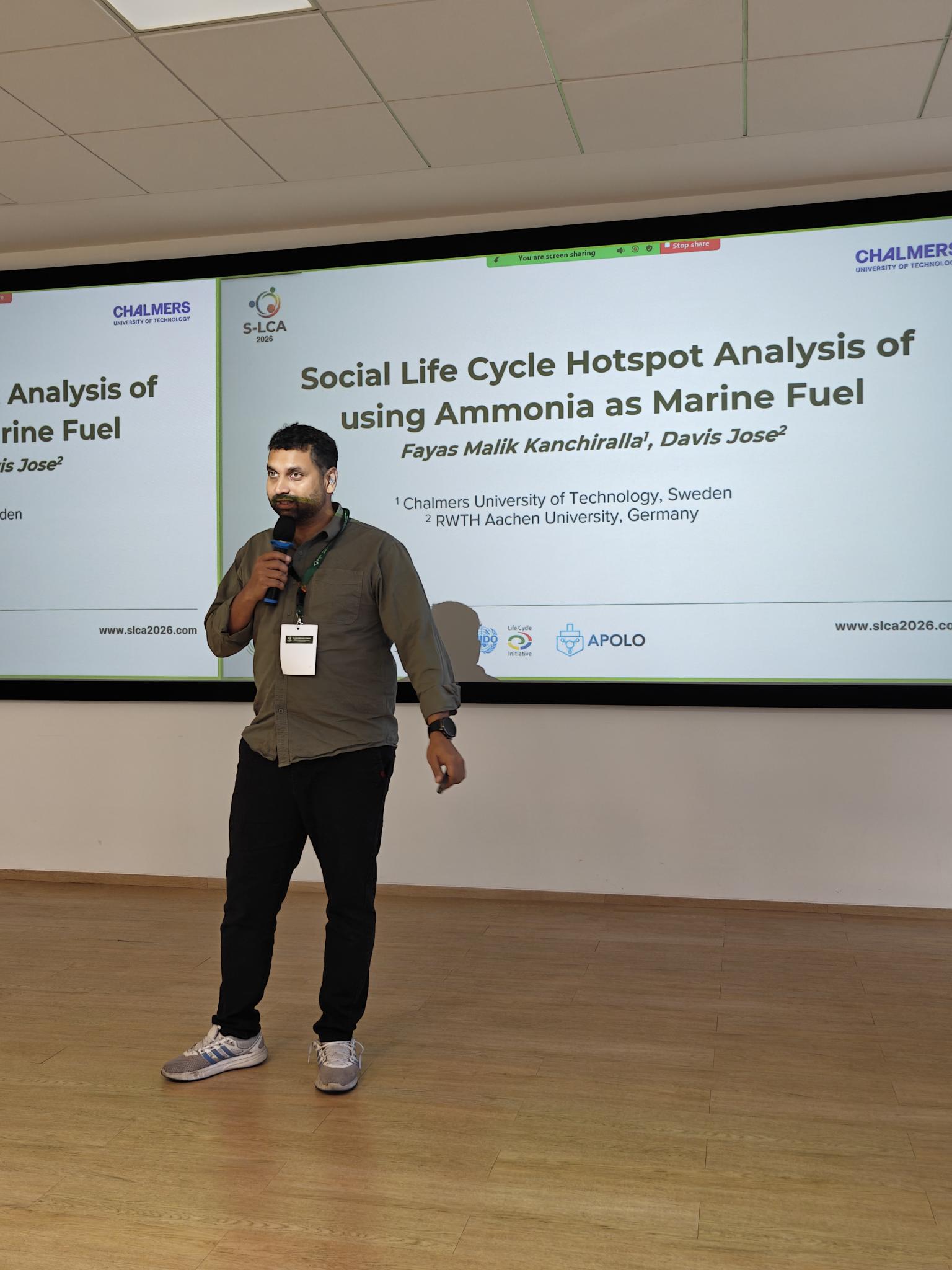
From 17–19 June 2026, the S-LCA 2026 Conference brought together researchers and experts in social life cycle assessment in Indonesia. The APOLO project was represented by Fayas Malik Kanchiralla from Chalmers University of Technology, who presented research on the social implications of using ammonia as a marine fuel.
The presentation, “Social Life Cycle Hotspot Analysis of using Ammonia as Marine Fuel,” explores the social impacts and potential hotspots associated with the future deployment of ammonia in the maritime sector.
Looking beyond environmental impacts
As ammonia is increasingly considered a promising energy carrier for the decarbonisation of shipping, understanding its sustainability requires looking beyond greenhouse gas emissions and environmental performance.
The study applies a Social Life Cycle Assessment (S-LCA) approach to investigate the prospective ammonia value chain, from fuel production to its use onboard ships. The analysis considers key stakeholders, relevant social impact categories and indicators, and the geographical aspects of the future supply chain.
The research focuses on electro-ammonia and examines its value chain, including renewable electricity, electrolysis, ammonia production, infrastructure, bunkering and onboard use.
By applying social hotspot analysis, the work contributes to a more comprehensive understanding of the opportunities and challenges associated with ammonia as a future marine fuel.
Supporting a sustainable maritime transition
The presentation highlighted the importance of considering social sustainability alongside environmental and economic performance when developing future maritime fuel systems.
This perspective complements APOLO’s technological work on ammonia cracking and hydrogen production and contributes to the broader discussion on how ammonia can support the transition towards cleaner and more sustainable maritime transport.
The presentation is available here:
Social Life Cycle Hotspot Analysis of using Ammonia as Marine Fuel – Fayas Malik Kanchiralla
The research further demonstrates APOLO’s commitment to addressing the maritime energy transition from a holistic sustainability perspective, bringing together technological, environmental, economic and social considerations.